Belgrade Shifts: Serbia's New Government Weighs Sanctions
Vucic's loss to student protesters signals a potential change in Serbia's stance on Moscow, even as war talks in Ukraine stall over the Donbas.
By Kaito Sokolov ·
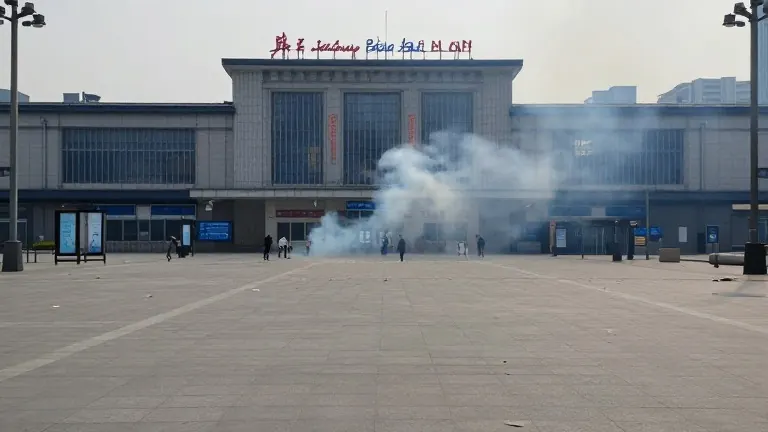
Thirteen people died in a Russian drone strike on the main train station in Dnipro on Wednesday. Ukrainian officials confirmed the toll, while President Volodymyr Zelenskyy called for decisive action from America and Europe to counter the escalation.
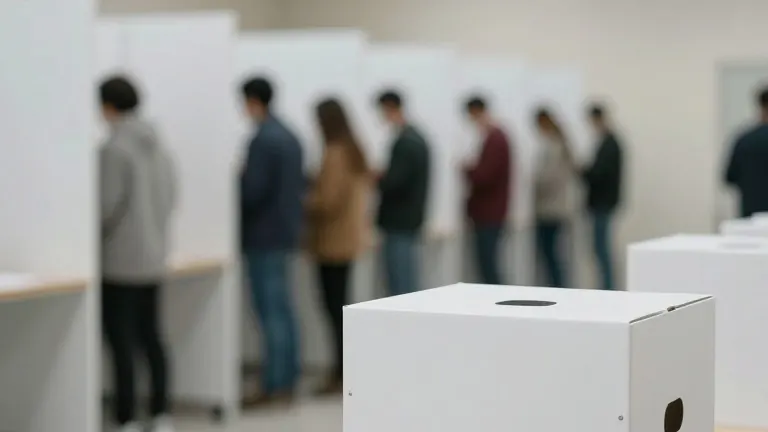
The attack occurred against a backdrop of shifting political power in the Balkans. In Serbia, voters removed Aleksandar Vucic from power, ending his party's dominance. The winning force gained momentum over two years of student-led street protests. Ruth Deyermond, a Russia expert at King's College London, noted on social media that President Vladimir Putin is not having his best year. Vucic conceded defeat and accused his opponents of carrying out dirty work to bring down a sovereign country.
The incoming Serbian government is not expected to change sanctions policy immediately. However, Ilija Srdanovic, a leading candidate for the Student List, told RFE/RL on October 27 that the country's stance could be reconsidered through public debate. Dmitry Peskov, the Kremlin spokesman, stated that Russia hopes the new political forces will understand that cooperation with Russia serves Serbia's interests. He emphasized that when it comes to imposing sanctions, the new leadership should stick to existing policy.
Analysts question whether Moscow will accept these changes. Ivana Stradner, a research fellow at the Foundation for Defense of Democracies, pointed to Russia's structural leverage in Serbia. She cited energy dependence and entrenched ties within the intelligence apparatus as challenges. Stradner observed that the student movement remained ideologically diverse, uniting around the demand to restore the rule of law rather than foreign policy alignments.
The war in eastern Ukraine complicates negotiations. A UN report released on October 26 stated that Russian authorities committed war crimes and crimes against humanity by attacking civilians and critical energy infrastructure. US-brokered trilateral talks, dormant since late February, are expected to resume next month. Plans for these talks emerged from meetings in Moscow and Oslo involving US envoy Steve Witkoff, Zelenskyy, Norwegian Prime Minister Jonas Gahr Store, and Finnish President Alexander Stubb.
Officials in regular contact with Putin believe he increasingly favors military escalation over compromise, according to Farida Rustamova and Howard Amos in the newsletter Vlast. They wrote that Putin does not intend to make compromises in peace negotiations. Tatyana Stanovaya of the Carnegie Russia Eurasia Center added that Moscow views trilateral talks as a way to prepare the ground for a settlement on its own terms.
The primary obstacle remains the portion of the Donetsk region that Russian forces have not yet captured. Putin insists Ukraine must cede this land, while Zelenskyy and most Ukrainians refuse to hand over territory defended by their soldiers. Mark Galeotti, an analyst and author, said on a podcast on October 25 that the peace process shows some promise but remains locked in. He predicted that peace is unlikely before spring, as Putin may prefer another winter of attacks on Ukraine.
Tensions between Washington and Kyiv flared in recent weeks. On October 10, President Donald Trump accused Zelenskyy of missing chances for peace and suggested Ukraine should get a new leader. Trump also announced an agreement with Putin to secure Russian diesel fuel for global markets. The US president waived tougher sanctions on Russia on October 17, just before they took effect. These moves, along with issues regarding Starshield satellite speeds, marked the biggest blowup between the two nations since February 2025.