Serbian Election: Vucic Concedes as Student List Takes Parliament
The student-led bloc is projected to win between 135 and 140 seats in a vote marked by the highest turnout in three decades.
By Rafael Collins ·
Serbian President Aleksandar Vucic lost his grip on power on Sunday as voters delivered a decisive mandate to a student-led opposition movement. The result ends more than a decade of dominance by the Serbian Progressive Party in a 250-member legislature.
Vucic addressed his supporters after initial vote samples indicated his list would secure 105 seats. He acknowledged the outcome directly, stating, "It is clear that we have lost these elections." Projections placed the Student List between 135 and 140 seats, giving them a clear majority.
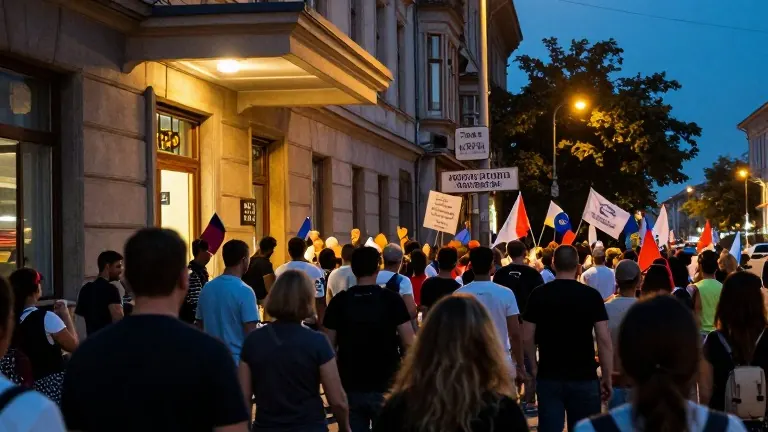
The political shift followed nearly two years of sustained public pressure. The movement originated after a train station canopy collapsed in Novi Sad on November 1, 2024, killing 16 people. What began as a youth-led protest expanded into a wider wave of social unrest that eventually formed the Student List platform. The group pledged to combat corruption, depoliticize public institutions, and restore citizen rights.
Ilija Srdanovic, a professor at the Faculty of Medicine in Novi Sad, led the movement during the campaign. Vucic had previously criticized the demonstrators, who included professors, doctors, and workers, by labeling them "blockaders" and accusing them of seeking to destabilize the country.
The election marked a return to high civic engagement, with voter turnout reaching its highest level in more than 30 years. Vucic, born in Belgrade in 1970, first entered politics in 1993 with the ultranationalist Serbian Radical Party. He later co-founded the SNS in 2008 with Tomislav Nikolic to pivot toward mainstream European politics. The party took power in 2012 with promises to fight corruption and organized crime.
Vucic served as first deputy prime minister from 2012 to 2014, then as prime minister, and became president in 2017. He won re-election in 2022, with his term originally set to run until 2027. Under pressure from the protests, he resigned in September and called for early elections while retaining significant influence over state policy.
Journalist Safeta Bisevac described Vucic as the "essentially the organiser" of the new party in its early days. She noted that while the party promised to fight corruption, the results were modest as authorities widened their control over institutions and media. Vucic's tenure saw substantial economic growth, with unemployment falling from 26 percent to between 8 and 9 percent. Nominal GDP nearly tripled to approximately 90 billion euros, and annual foreign direct investment rose from roughly 800 million euros in 2012 to a record 5.2 billion euros in 2024.
Political scientist Dusko Radosavljevic observed that the students gave voice to the justified anger of citizens. He characterized the previous decade as a period of systematic pressure and the destruction of social institutions, noting that intelligence services focused heavily on monitoring political opponents while critical thinking was pushed out of public media.