Ukraine Ceasefire Talks Set to Resume in November After St. Petersburg Breakthrough
A three-hour meeting in Russia has secured an agreement to restart trilateral peace negotiations, marking a significant shift in diplomatic efforts after months of stalled progress.
By Kaito Sokolov ·
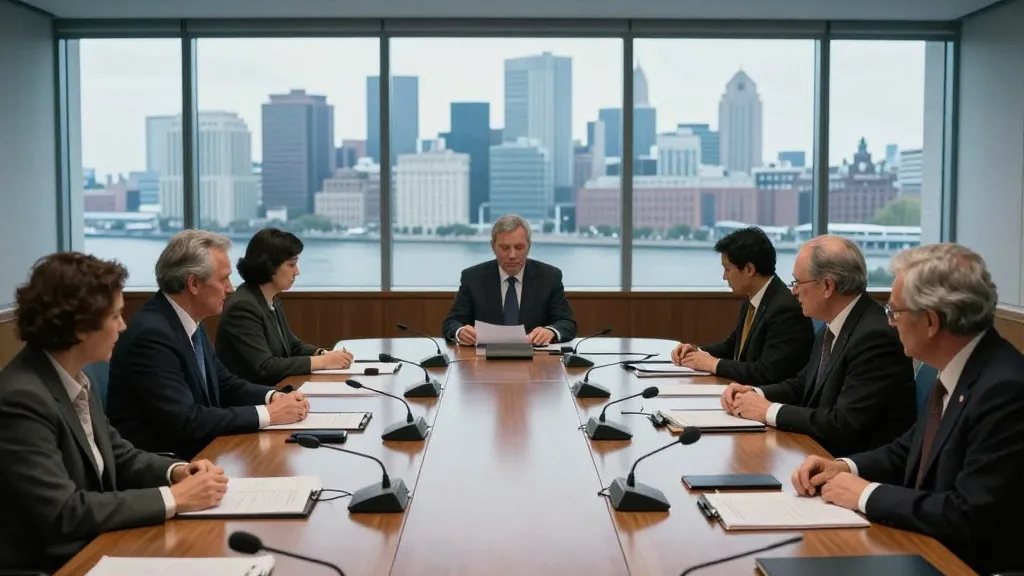
Russia has formally agreed to resume three-way peace negotiations with the United States and Ukraine, a move that could trigger the first substantive talks of this kind since early this year. The Kremlin announced the decision on Wednesday, following a high-level meeting in St. Petersburg that signaled a new phase in the diplomatic push to end the war.
The path to this agreement involved a series of rapid diplomatic maneuvers over the last week. U.S. envoy Steve Witkoff met with Ukrainian President Volodymyr Zelenskyy and European leaders in Oslo, where he presented initial proposals for a ceasefire. Although the Kremlin described those Oslo drafts as containing little real value, they laid the groundwork for the subsequent engagement in Russia. On Tuesday, Witkoff traveled to St. Petersburg to meet with President Vladimir Putin. The discussion took place at the Constantine Palace and lasted approximately three hours. It was joined by Russian officials Yuri Ushakov and Kirill Dmitriev, as well as Jared Kushner, who participated via video link.
During the session, Witkoff and Kushner proposed a technical-level meeting involving all three nations. They also reviewed progress made with Kyiv the previous day. Ushakov stated that Putin agreed in principle to restart the talks after November 10. The upcoming discussions will center on constructing a security framework for both nations once the conflict concludes. This timeline aligns with expectations that the new talks may take place in mid-November.
Ukrainian President Zelenskyy expressed support for the swift restart of negotiations. In an audio message released late Wednesday, he noted that the agenda is clear: to end the war and prepare for a leaders' level meeting. He acknowledged that Moscow had previously expressed readiness to meet but that plans were often canceled. Zelenskyy added that he would observe what happens this time around.
The diplomatic push comes as the Trump administration intensifies pressure on Kyiv to reach a deal. President Trump told reporters in the Oval Office that the U.S. has provided significant support to Ukraine but has received little in return. He warned that failing to make a deal could lead to a very bad outcome. This sentiment follows a period of strained relations between the two leaders. Meanwhile, Witkoff’s itinerary included a stop in Oslo after his return from Russia, where he met with Norwegian Prime Minister Jonas Gahr Støre.
Støre suggested that the region may be entering a new phase where Russia is actively seeking diplomatic opportunities. He also addressed the sensitive issue of borders, noting that while Ukraine may not formally accept the current front line as a border, it might be able to live with it in practice. This diplomatic activity coincided with continued military exchanges. Russian forces conducted overnight strikes on energy facilities in Kyiv and other cities, resulting in multiple casualties and damage to residential buildings. The Russian Defense Ministry reported intercepting hundreds of Ukrainian drones over several regions and the Black Sea.
In a related development, Russia released a retired American teacher who had been imprisoned on mercenary charges. Witkoff described this as a goodwill gesture following Trump's request to Putin. Additionally, Putin discussed the possibility of a trilateral economic summit in China with Witkoff. He also met with Chinese Premier Li Qiang, reinforcing the deepening ties between Moscow and Beijing. These interactions highlight the broader geopolitical landscape in which the Ukraine peace process is unfolding.
The next steps involve finalizing the logistics for the mid-November talks. Ushakov indicated that some joint economic projects between the U.S. and Russia are nearing the implementation stage. As the three nations prepare to sit at the table again, the focus will remain on whether these technical discussions can translate into a durable end to the fighting.