Charles labels slave trade shameful chapter in Antigua
The King addressed 56 leaders but withheld a formal apology, while Prime Minister Burnham announced a 54 million dollar infrastructure package for the Caribbean.
By Kaito Sokolov ·
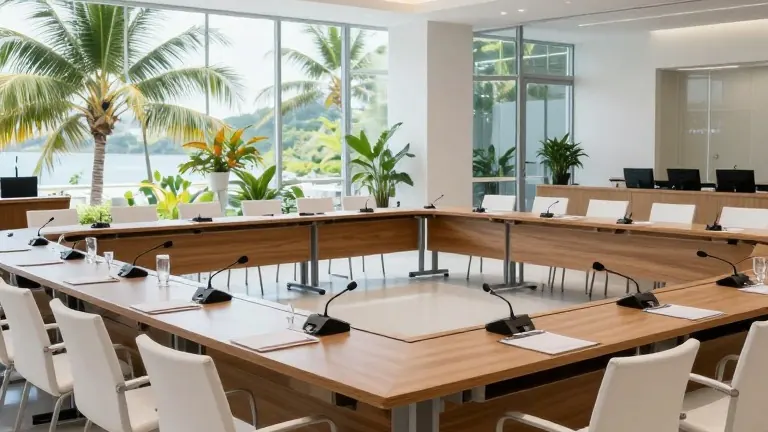
The Commonwealth of Nations gathered in Antigua and Barbuda to address the legacy of the transatlantic slave trade. The summit brought together heads of state from 56 member nations to discuss historical justice and modern cooperation. King Charles III opened the proceedings on Tuesday with a detailed assessment of Britain’s role in the past.
The King described the transatlantic trade in enslaved persons as a shameful chapter of history. He stated that this period continues to cast a shadow over the islands and other member states. Charles explained that his understanding of the era's horrors has deepened through a process of listening and learning. He did not issue a formal apology on behalf of the United Kingdom during his opening remarks.
Prime Minister Andy Burnham took a distinct position regarding a formal apology. The new leader said officials are holding talks with national leaders to determine what such a statement might look like. This marks a shift from previous administrations, as Burnham explicitly welcomed the possibility of a formal expression of regret. He indicated that the government remains open to the idea while consultations continue.
Burnham outlined specific financial commitments to support the region. He revealed a 40 million pound investment for critical infrastructure in the Caribbean over the next three years. In US currency, that amount equals 54 million dollars. The Prime Minister also signaled an intent to discuss debt resets for smaller Commonwealth nations to ease their economic pressures.
The leaders used the summit to define practical areas for future cooperation. Charles urged the group to focus on resilience and progress rather than dwelling solely on historical grievances. He cited access to education, jobs, and opportunities as key tools for helping those facing disadvantage. The King also pointed to intra-Commonwealth trade and climate change resilience as essential frameworks for moving forward.
Charles used a nautical metaphor to frame the Commonwealth's next steps. He noted that sailors cannot command the winds of the past but can choose how to set their sails. The monarch argued that the past cannot be changed, but it can serve as a lesson for future actions. He told the leaders that evil need not have the last word.
The gathering reflects a complex dynamic between acknowledging past suffering and building modern partnerships. While the debate over reparations and apologies continues, both the King and the Prime Minister emphasized action in the present. Their efforts aim to balance historical recognition with a forward-looking agenda for the 56 nations.
The summit provided a platform for these countries to address shared history and future cooperation. The financial pledge and the discussion of a formal apology represent concrete steps in the diplomatic process. The leaders concluded their initial sessions with a focus on practical improvements in daily life across the Commonwealth.