New Zealand Election: 131 Seats Leave Government Hanging by a Thread
With 67 seats, the National-led bloc holds a one-seat advantage, but 400,000 special votes could shift the balance before talks begin.
By Rafael Collins ·
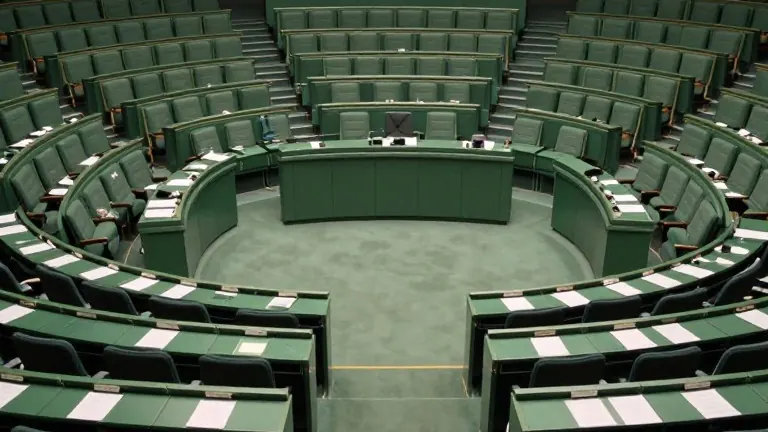
New Zealand's Parliament will feature 131 elected members following Saturday's general election, a total that requires exactly 66 seats to command a majority. The current count places Prime Minister Christopher Luxon's conservative bloc at 67 seats, a single-seat cushion that leaves the governing equation in a state of delicate uncertainty. This margin is the tightest in recent history and sets the stage for weeks of negotiation before a stable administration can be formed.
The financial and political stakes are high as voters punished the two dominant parties. The National Party captured 29.21% of the preferred party vote, while the Labour Party, led by Chris Hipkins, received 29.36%. Despite nearly identical party vote shares, the two major parties secured very different results in local constituency races. National won 42 seats, all through direct local victories, whereas Labour secured only 36 seats. This disparity reflects the mechanics of New Zealand's mixed-member proportional voting system, which allocates seats based on both local wins and the overall party vote.
The election results delivered a clear signal from voters regarding minor parties, which now hold substantial negotiating power. The libertarian ACT Party won 13 seats, and the populist New Zealand First Party secured 12. On the left, the Greens took 16 seats, and the Indigenous rights group Te Pāti Māori won five. A new entrant, Opportunity, led by 38-year-old business consultant Qiulae Wong, claimed seven seats. Wong, a political newcomer who took leadership of the group less than a year ago, stated that her party is unaligned and prepared to work with either major bloc to form a government.
Luxon, who has served as prime minister since taking office in 2020, did not declare victory immediately. He described the result with cautious optimism, noting that National holds the most seats of any single group. However, the party faces internal challenges as several senior figures, including the finance and defense ministers, the attorney general, and the speaker of parliament, are set to exit politics. Luxon attributed public dissatisfaction to global economic shocks affecting New Zealand's trade-based economy. He told reporters on Sunday that the public was weary of political discourse and suggested a three-week break while the final counts are processed.
The path to a final outcome is not complete. Electoral officials began counting approximately 400,000 special votes on Sunday, a process that includes ballots from New Zealanders living abroad. This count is expected to take three weeks, with final results scheduled for release on November 27. Historical trends suggest these special votes often favor left-wing parties, potentially adding one or two seats to that bloc. If the left bloc, currently at 57 seats, gains enough support from these counts to approach a majority, the political calculus will shift significantly.
Hipkins, who lost office in 2023, appears to face a second consecutive defeat for his party. The left bloc currently falls short of the 66-seat threshold by nine seats. Even if special votes boost their numbers, Hipkins may still require the support of Wong's Opportunity party to form a government. Prior to the election, Luxon had ruled out negotiating with Wong, though he avoided confirming a change in that position on Sunday. The delay in finalizing the seat count means that formal coalition talks will not commence until late next month.
New Zealand operates with a single chamber of Parliament and no state-level divisions, giving the central government broad authority over national policy. The country, which has a population of 5.6 million, elects its government every three years. The current impasse highlights the fragmented nature of the electorate, with voters splitting their support across multiple groups rather than consolidating behind the traditional duopoly of National and Labour. The caretaker government led by Luxon will remain in place until a new administration is confirmed.