20,000: Tesla's Weekly Target for 2027 as Optimus Delays Hit Late 2027
Elon Musk confirms Tesla will not ship Optimus robots to outside customers until late 2027, citing persistent challenges with the robot's hands, durability, and AI.
By Kaito Sokolov ·
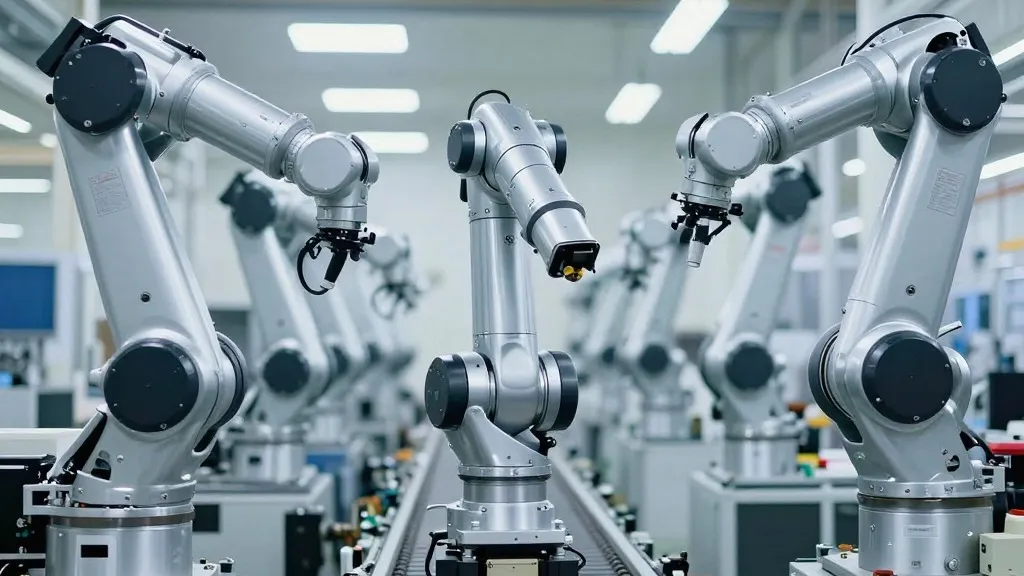
Tesla has officially pushed its timeline for delivering the Optimus humanoid robot to external customers to the end of 2027, a shift that underscores the ongoing technical hurdles facing the automaker. During the Q3 2026 earnings call, CEO Elon Musk acknowledged that significant work remains in three critical areas: the robot's dexterous hands, its overall durability, and the artificial intelligence that drives its decision-making. This latest update follows a series of previous timeline revisions, with Musk noting that while early production has begun, the company is not yet ready for widespread commercial release.
The production numbers reveal a gap between current capabilities and future goals. Tesla has installed most of the equipment on its high-volume line in Fremont, a facility previously used for Model S and X production, with the capacity to build roughly a million units annually. That target equates to approximately 20,000 robots per week. However, Musk cautioned that reaching this rate will take at least a year, possibly longer, because key components of the design are still undergoing changes. The company aims to solve these issues by the end of next year before beginning external deliveries, initially focusing on industrial tasks that are dangerous, repetitive, or require 24/7 operation.
Key figures at Tesla, including Musk and an Optimus engineer, identified specific hardware and software bottlenecks. The hand was singled out as the most difficult hardware component to perfect. It must be soft enough to handle delicate objects yet robust enough to withstand constant wear, a challenge exacerbated by the fact that robots cannot heal like human skin. Additionally, custom gears have raised reliability concerns. On the software side, Tesla is still refining its AI architecture. Unlike its cars, which have a massive fleet collecting data for Full Self-Driving, Tesla lacks a large robot fleet. To address this, the company plans to build 10,000 to 20,000 robots for an "Optimus Academy" where they will practice tasks, and it intends to integrate its AI5 chip into the robots around April 2027.
Musk promised a video demonstration within the next month or two showing the robot performing unscripted tasks, arguing that many current industry demos rely on pre-programmed routines that fail in real-world conditions. He maintained that no competitor is currently close to Tesla’s progress on general-purpose humanoids. However, this claim faces scrutiny from rivals like XPeng and Hyundai’s Boston Dynamics. XPeng, for instance, recently activated an automated production line in Guangzhou, with over 80% of core processes automated, and plans mass production by the end of 2026. Boston Dynamics, meanwhile, has already committed all its 2026 Atlas deployments, including to Google DeepMind, and is using the robots to sequence car parts in a Georgia training center.
The stakes for Tesla are high as it seeks to establish a foothold in the humanoid robotics market before competitors gain a decisive lead. The company’s Q3 shareholder letter described the current units leaving the Fremont line as the first "production-quality" bots, implying that earlier versions did not meet that standard. With XPeng aiming for deliveries in the first half of 2027 and Boston Dynamics deploying units in active manufacturing settings, Tesla’s late-2027 target places it on a similar, if not slightly behind, timeline to its main rivals. The coming weeks will be crucial as Tesla prepares to showcase its unscripted capabilities, a test that will determine if the 2027 delivery date is a realistic milestone or just another delayed promise.
Investors and industry analysts are watching closely to see if Tesla can bridge the gap between building robots and making them useful. The core challenges remain consistent across the industry: creating hands that survive real work, ensuring robots are reliable enough to pay for themselves, and developing AI that can generalize to new tasks. While Tesla may currently have the most robots built, the competitive landscape is tightening. With competitors like XPeng and Boston Dynamics advancing their own production and deployment strategies, Tesla’s promise of a month-or-two video demonstration will serve as a critical litmus test for its claims of technological superiority.
More Business · Bad Business · Report a business · Got a Story?