Libya: Eastern Legislature Ratifies Turkish Maritime Deal
Benghazi's parliament voted to accept the agreement on October 20, a move designed to secure Ankara's support for a US-brokered plan to install Saddam Haftar as president.
By Jonathan Ramirez ·
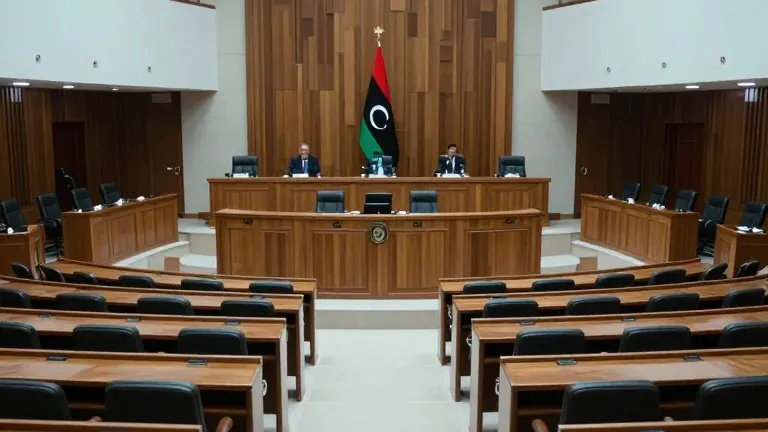
The House of Representatives in Benghazi ratified a maritime memorandum with Turkiye on October 20, ending a seven-year period of official opposition to the deal. The vote, which took place in a single sitting, was immediately condemned by the European Union, Greece, Israel, and Egypt. Despite the international reaction, the ratification serves a specific domestic purpose for eastern Libya's military leadership.
Saddam Haftar, the son of General Khalifa Haftar who commands the east, orchestrated the legislative shift. His primary objective is to secure the Libyan presidency. To achieve this, he requires the backing of Ankara, which holds decisive influence over western Libya. By accepting the maritime concessions, Saddam aims to buy Turkish support for a US-backed power-sharing arrangement currently being negotiated in Washington.
The path to this vote began with the removal of Aguila Saleh, the speaker of the House of Representatives. Saleh held the position for 12 years and was a key ally of Cairo and a barrier to the deal's passage. He was replaced by Al-Salhin Abdulnabi, a member of the Obeidat tribe and former chair of the Libyan-Turkish friendship committee. This change in leadership aligns the legislature with the new strategic direction while managing tribal dynamics within the Obeidat constituency.
The United States, led by senior adviser Massad Boulos, is pushing for a settlement that would install Saddam as president. This plan pits the Trump administration's transactional approach against the interests of Athens, Nicosia, and Israel. Israel has expressed unease over Turkish influence, while the EU has struggled to assert authority in the region. The EU's recent focus on migration has limited its leverage, leaving it to request that Libya police waters that are now the subject of a new maritime boundary.
Abu Dhabi supports the succession, viewing Saddam as a reliable partner after a decade of investment in the Haftar family's political project. For the Emirates, the maritime deal is a modest cost to ensure their preferred candidate assumes power. Egypt, however, remains a variable. Cairo's objection to the deal focuses on legal encroachments into its exclusive economic zone. This framing suggests Egypt is keeping its political options open, particularly as its relationship with Turkey improves over shared interests in Sudan and the Red Sea.
If the US plan fails, Saddam faces a complex dilemma. His brother Khaled, the chief of staff for the Libyan Arab Armed Forces, is closer to Cairo and has criticized the US initiative. Khaled represents a potential alternative candidate that Egypt might support. Should Egypt back Khaled, Saddam would have expended his main negotiating chip with Turkey. He would be left squeezed between a patron in Abu Dhabi and a partner in Ankara that has already received its reward, leaving him with few options to secure his position.