Israelis vote in tight race over war and conscription
Voters decide on the next government as the cost of the 2023 attacks and military service rules shape a narrow contest between Netanyahu and Eisenkot.
By Kaito Sokolov ·
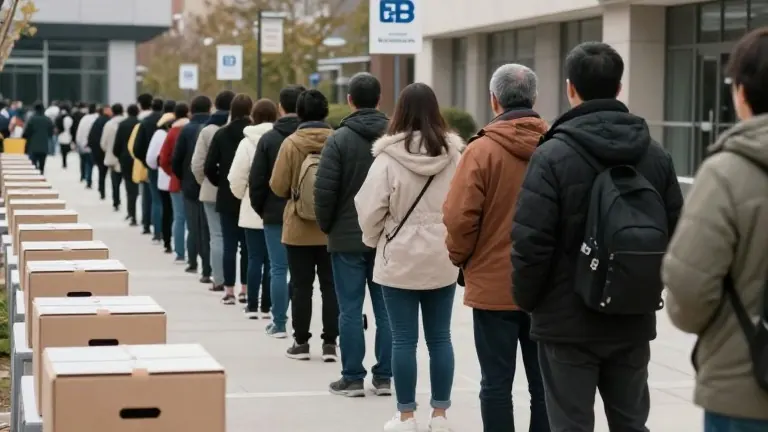
Voters in Israel go to the polls Tuesday to select the country's next leader. The decision determines who leads the nation as it manages ongoing conflicts and internal political divisions. No single party is expected to win a majority in the Knesset. Instead, parties will negotiate to form a coalition and appoint a prime minister.
The campaign centers on the events of October 7, 2023. Hamas militants killed 1,200 people, mostly civilians, and took 251 hostages that day. The Israel Democracy Institute reports that 68 percent of Jewish Israelis cite their views on that attack as a central factor in their voting choice. Security failures and the societal burden of the war dominate public discourse more than the humanitarian situation in Gaza.
Benjamin Netanyahu, 77, leads the Likud party and has served as prime minister for the longest continuous stretch in Israeli history. He has resisted calls for a formal commission of inquiry regarding the October 7 security breakdown. His chief rival is Gadi Eisenkot, 66, who leads the centrist Yashar party. Eisenkot spent four decades in the military and lost his son and two nephews in combat in Gaza.
Military service is a key point of contention. About a quarter of Jewish voters ranked mandatory conscription as a decisive issue. Netanyahu’s coalitions have relied on ultra-Orthodox parties that exempt young men studying religious texts from service. Eisenkot has pledged to end these exemptions. The policy has angered many citizens during a period of prolonged warfare.
Other major figures in the race include Naftali Bennett, 54, a former prime minister running on a joint ticket with Yair Lapid. Itamar Ben-Gvir, 50, leads a far-right party as the current national security minister. Yair Golan, 64, a former general, heads the Democrats party, which supports establishing a Palestinian state. Mansour Abbas leads the Ra'am party, focusing his campaign on crime in Arab communities rather than the broader conflict.
International dynamics influence the election. President Donald Trump endorsed Netanyahu last week. The United States and Israel launched a joint military action against Iran on February 28. Regional talks continue as tensions remain high. An international arrest warrant exists against Netanyahu, and rights groups and U.N. officials have accused Israel of genocide, a charge the country denies.
The outcome will shape Israel's foreign relations and domestic policy. The next government must navigate relationships with the United States and other nations while addressing the demands of a coalition of parties with differing priorities. The coalition-building process may take weeks or months before a new prime minister is officially named.