UK launches 72-hour survival guide as cyber threats rise
The campaign follows a decade of silence and warnings from military and cyber leaders about imminent digital attacks.
By Jonathan Ramirez ·
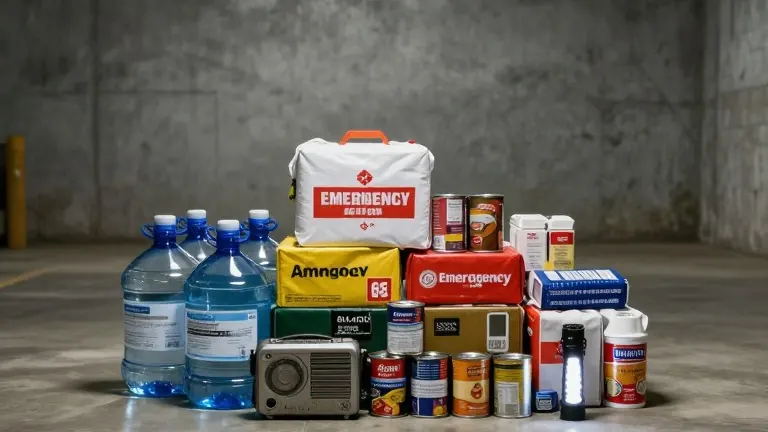
The British government has launched its first national public preparedness campaign in nearly 50 years. The initiative, titled Be Ready, instructs citizens on how to maintain self-sufficiency for three days during an emergency.
The guidance covers scenarios ranging from climate crises to cyber disruptions and hostile state threats. It specifically advises on storing food, water, and essential supplies. This marks a shift from the previous 1980 Protect and Survive campaign, which focused on nuclear attack preparations and was later ridiculed for its practicality.
Gen. Sir Roland Walker, head of the British Army, addressed approximately 700 soldiers at a garrison in northern England last month. He stated that the business of soldiering had returned to the national psyche. Walker warned that political leaders would soon have a frank conversation with citizens about where the risk lies and what the nation must be prepared to do.
Lucy Easthope, a global disaster recovery specialist who has advised on events from the 2004 Indian Ocean Tsunami to the 9/11 attacks, said the campaign aims to provide reassurance rather than fear. She noted that the UK has avoided the negative messaging that characterized earlier preparedness efforts. Other European nations, including France, Germany, and Sweden, have recently updated their own emergency guidance, with some recommending survival periods of up to ten days.
Richard Horne, head of the UK National Cyber Security Centre, described the current situation as a moment of urgency. He stated that AI-powered malicious software is highly likely to target power stations, airports, and hospitals within two years. Horne also noted that military networks face sustained attempts to penetrate systems, including Russian hybrid warfare campaigns.
Public reaction is mixed. Nyari Matebwe, a family physician in Hertfordshire, initially viewed the campaign with skepticism. However, recent suspected hacking attacks on supermarket freezers in Europe and airplane bomb hoaxes have prompted her to reconsider. Reena Patel, a lawyer from north London, cited competing crises and the potential for Russian aggression as reasons to prepare. She is purchasing items such as a wind-up radio and water purification filters.
Defence Secretary Wes Streeting warned in October that the country needs to be ready for war in 1,000 days. He emphasized the need to prepare for the worst to prevent it. Meanwhile, Preyal Shah, a working mother from Harrow, is bulk-buying 10 kilograms of rice, five kilograms of pasta, and multiple cases of tinned food. She is also stockpiling newspapers to use as kindling for a coal-burning stove.