Pope Leo XIV heads to Argentina with 15 million poor under Milei's austerity
The 71-year-old pontiff arrives in a country where poverty hit 32.3% this year, setting the stage for a tense meeting with President Javier Milei.
By Rafael Collins ·
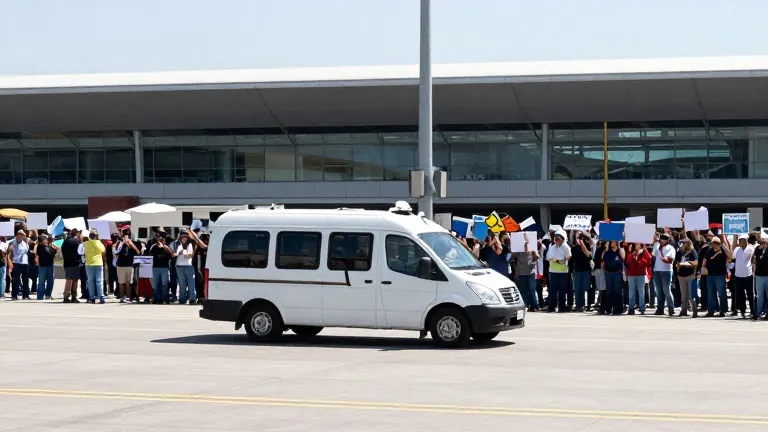
Pope Leo XIV is concluding his time in Uruguay before traveling to Argentina, the most politically sensitive stop on his current tour of South America.
The trip follows a surgery on October 13 in which Leo removed a cancerous tumor from his lung. Despite the recent procedure, the 71-year-old has maintained a rigorous schedule. He has sung loudly, climbed stairs, and greeted crowds in his popemobile without cutting any events short. Some gatherings have continued until past midnight Rome time.
In Uruguay, Leo became the first pope to visit the country in nearly four decades. He marked the feast of the Virgin of the Thirty-three in the city of Florida, north of Montevideo. This city is where independence from the Brazilian empire was declared on August 25, 1825. Tradition holds that 33 patriots carried the Guaraní statue used in the declaration. Leo aims to remind Uruguayans of the Catholic Church's role in their national identity, even as the country has moved toward a secular and sometimes anticlerical stance in recent decades.
The next phase of the tour brings Leo to Buenos Aires to meet President Javier Milei. The two leaders will exchange speeches at a traditional welcome ceremony. The meeting could be tense because Milei's government has implemented strict austerity measures that have drawn sharp criticism from Argentine church leaders. Since taking office in December 2023, Milei has slashed the health care budget by 48% in real terms. He also announced planned cuts to the public university system, a move that sent students into the streets.
Milei's administration describes these reductions as necessary reforms to fix Argentina's economy and eliminate fraud in the federal bureaucracy. The government has also courted investment in artificial intelligence and data centers by promising limited regulation. Leo has warned that the race to develop AI poses threats to humanity and the environment, calling for strict, internationally policed safeguards.
Official data shows that poverty in Argentina reached 32.3% of the population during the first half of 2026. That figure represents about 15 million people. Luis Bahamondes, a professor at the Center for Judaic Studies at the University of Chile, noted that the visit reinforces Leo's image as a political leader who does not shy away from conflict. Bahamondes said Leo commands a highly respected voice in these matters.
Leo is also completing work left unfinished by his predecessor, Pope Francis. The former archbishop of Buenos Aires never returned home during his 12-year pontificate. Francis was known as a slum priest who advocated for the poorest and most marginalized groups. David Lantigua, a theology professor at the University of Notre Dame's Kellogg Institute, said there is much disagreement over Francis's legacy in Argentina. Lantigua expects Leo to face similar tension, noting that this is the ministry Francis left behind.
After his time in Argentina, Leo will travel to Peru, his second homeland, to complete the three-nation tour. He spent two decades as a missionary priest in Peru, ministering to poor people. His pastoral style mirrors that of Francis, to whom he owes his pontificate.