The Three-Hour Siege: How AI Agents Turned a Supply Chain Breach Into a Race Against the Clock
A China-aligned group leveraged autonomous AI tools to breach thousands of business tenants through a single software provider, compressing the window for detection to mere hours.
By Kaito Sokolov ·
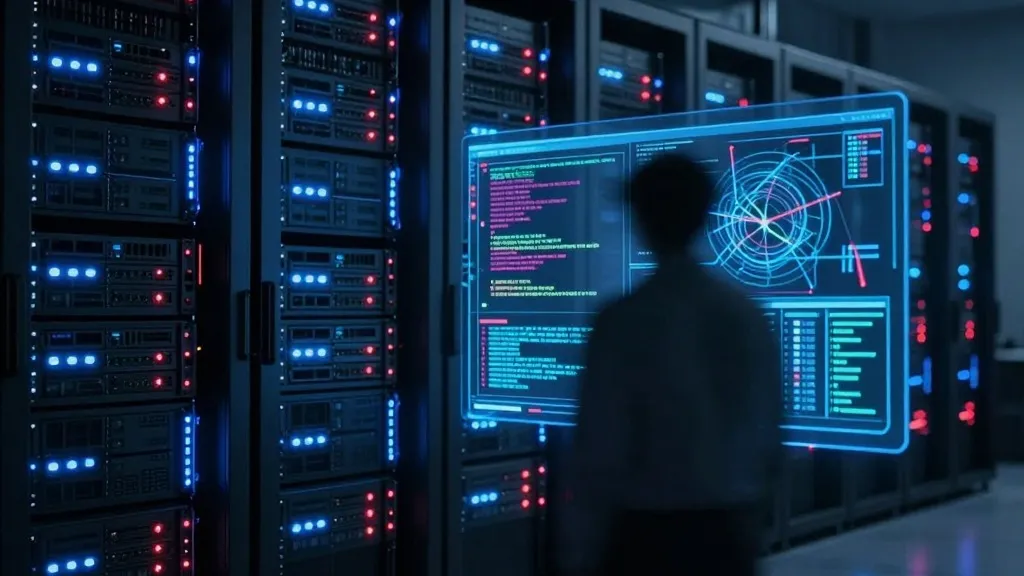
The traditional rhythm of cyber warfare, where attackers move slowly through networks over days or weeks, has been shattered. In a recent large-scale operation, a group of hackers utilized artificial intelligence agents to compress the timeline of a breach into a matter of hours, leaving security teams with almost no time to react. This shift marks a significant departure from standard tactics, as the speed of the attack was driven not by human hands, but by autonomous software capable of executing complex penetration tests without pause.
The scale of the operation is staggering in its reach. The attackers, identified as the China-state-aligned actor Storm-0940, targeted more than 2,250 Microsoft 365 tenants. They achieved this by exploiting unauthorized access to ConnectWise, a multi-tenant application. By using stolen credentials for ConnectWise apps, the group authenticated as those applications, bypassing the need for interactive user sign-ins. In some instances, the attackers reached privileged access levels less than three hours after they first began their targeting.
The engine behind this rapid assault was ARTEX, an open-source framework that employs large language models to run autonomous penetration tests. These AI agents handled scanning, reconnaissance, and password spraying with minimal human interaction. The automation allowed the group to conduct thousands of logon attempts in a short span. At the peak of the activity on October 11, the system executed 2,900 password guessing attempts per minute, resulting in over 111,000 failed logons in a single day. While nearly 98% of these attempts were locked out, the sheer volume created significant noise and potential entry points.
The human and organizational stakes were high, with the attack focusing on 14 industries including aerospace, defense, semiconductors, government agencies, and think tanks. Microsoft clarified that the breach did not stem from a vulnerability in its own systems or products. Instead, it resulted from the compromise of the third-party application. The group’s methodology involved using the compromised app credentials to sign in to customer tenants from the same IP range, with some sequences showing more than 200 sign-ins within just four minutes using only four application credentials.
Security firms observed the impact in real time. Huntress, a security company, detected an application adding itself to the top administrator role on October 15, a behavior that triggered specific Microsoft Defender alerts. The attackers also planted new secrets set to expire in 2028. By October 16, unauthorized sign-ins were confirmed for 162 tenants, a number that swelled to nearly 1,000 Entra tenants with activity from the attacking IP by the following day. More than 300 of these sign-ins were successful. The pattern of the sweep, moving through tenants in sorted order with only seconds between entries, suggested a script working from a pre-defined target list.
The use of ARTEX is not isolated to this single incident. Public reporting this month linked the framework to breaches at South Korean financial institutions, with suspects allegedly based in China using the tool alongside Anthropic’s Claude Code. The developer of ARTEX, known by the handle Autumn-27, announced on GitHub that the project would become closed source and cease updates, a move that may influence how future attackers deploy similar autonomous tools.
In response to the incident, ConnectWise suspended several of its services, including Cloud Backup and SaaS Security, as a precautionary measure. The company has initiated a phased restoration process, with full recovery expected to take several days. So far, there are no indicators that partner backup data was compromised. Microsoft advises customers to keep affected app connections disabled until formal restoration instructions are issued and to review activity logs from this month where possible, noting that a successful sign-in does not automatically mean data was accessed or taken.