San Francisco Robotaxi Data: Consumer Prices Flat, Driver Earnings Up
Gridwise Analytics reports that median trip costs held steady in San Francisco while human driver income rose, challenging the narrative that autonomous vehicles hurt the labor market.
By Jonathan Ramirez ·
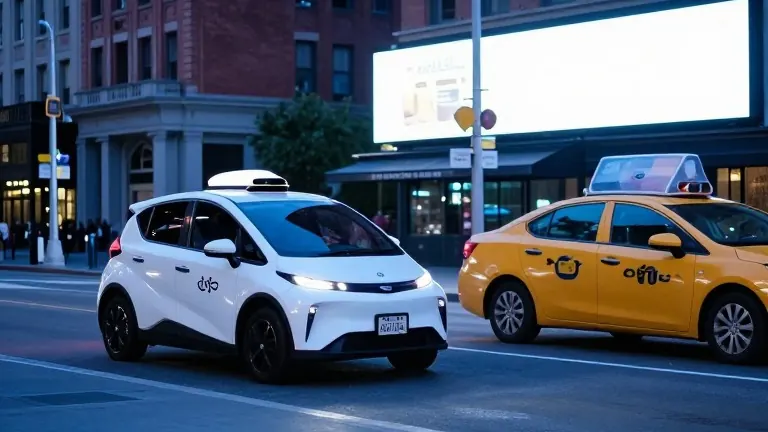
Median prices for rideshare trips in San Francisco remained flat between the second quarter of 2024 and the second quarter of 2026, while prices across the rest of the United States increased, according to data released by Gridwise Analytics. The findings suggest that the introduction of autonomous vehicles has not raised costs for riders in the Bay Area. During this same two-year period, human drivers in San Francisco completed fewer trips per hour, yet their quarterly earnings continued to grow.
Opponents of autonomous vehicles have long argued that the technology acts as a job killer, threatening to displace rideshare drivers. This concern has driven legislative proposals in cities including Minneapolis, Boston, and Washington, D.C., as well as in New Jersey. These measures often mandate higher insurance premiums for driverless cars, require a human driver to be present in the vehicle, or cap the percentage of trips that can be completed without a human operator.
Gridwise Analytics indicates that human drivers and autonomous vehicles can coexist in a single marketplace without harming either party. The data point to a competitive dynamic where the presence of new technology forces existing companies to adjust. When a new rival enters the market, established players have stronger incentives to compete for customers by adjusting fees or offering better pay to drivers. This competition benefits consumers even if they do not ride in an autonomous vehicle, as the availability of alternatives forces the entire market to respond.
The San Francisco experience provides a real-world example of how autonomous vehicles interact with existing transportation infrastructure. The city was an early adopter of the technology, a status that allowed it to gather data on the interaction between robotaxis and human-driven services. This early adoption serves as a case study for other jurisdictions considering their own rollouts. The data challenges the view that regulation is necessary to protect workers, showing instead that market forces can balance labor and consumer outcomes.
California is approaching a transition in state leadership, with Xavier Becerra poised to become governor. His policy framework for emerging technology favors heavy oversight and prioritizes current labor models over future productivity. Becerra’s vision includes mandates for labor intervention and human review before automation can be deployed. Such rules could penalize industries that drive the state's economy by adding layers of precautionary regulation.
Regulators in other states and cities continue to propose rules that could slow the deployment of autonomous vehicles. These proposals stem from a desire to protect working people and allow them time to adapt to new economic conditions. However, the data from San Francisco suggests that the market is already adapting. Drivers are earning more while working less, and consumers are paying the same or less. The evidence indicates that the technology is not displacing human drivers but is instead reshaping the labor market in a way that benefits both parties.
The benefits of autonomous vehicles extend beyond economics to include access for people who cannot drive and a reduction in traffic fatalities. San Francisco's early embrace of the technology has generated a dataset that offers insights into the practical effects of automation. As other states and cities consider their own approaches, the San Francisco results provide a concrete reference point for what happens when the market is allowed to adjust to new technology without immediate legislative intervention.