Ancient Iron Furnaces Reveal Bantu Engineering
Archaeologists found clay structures in Zimbabwe that used natural air flow to smelt metal without bellows, a technique that helped define a continental migration.
By Jonathan Ramirez ·
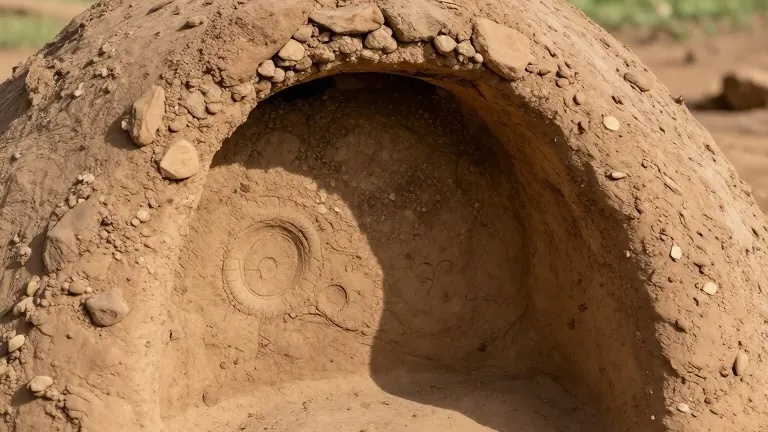
Modern assumptions about ancient technology often miss the mark. The people who built Great Zimbabwe did not rely on brute force to extract iron. Instead, they engineered a system that ran on physics alone. This discovery challenges the view that early African metallurgy was simple or labor intensive. It was, in fact, a sophisticated industrial process that changed how the region operated.
Archaeometallurgists have measured the surviving furnace ruins near the stone city. Some structures spanned nearly an adult arm's width. Their thick walls withstood temperatures above 2,100 degrees Fahrenheit. That heat level is required to melt iron ore. In Mashava, a village 25 miles northwest of the main site, researchers found fragments with fingermarks preserved in the clay. These marks show that workers smoothed the interiors by hand during construction.
The key innovation was the airflow mechanism. Most furnaces of that era required workers to pump air into the fire using bellows. This was a constant, exhausting task. The Great Zimbabwe furnaces used natural draft. They drew air in automatically and released exhaust through a chimney. No human labor was needed to maintain the fire. Ezekiel Mtetwa, an archaeometallurgist at the Field Museum of Natural History in Chicago, noted that the size and number of these units indicate intensive production. He described the technology as sophisticated and efficient.
The people who built these sites were part of a larger group known as Bantu speakers. They originated in western Africa. Starting 6,000 to 4,000 years ago, they began a slow expansion across the southern half of the continent. They were not just moving people; they were moving a specific set of skills. They brought farming, livestock herding, pottery, and metalworking to areas previously dominated by hunter gatherers. This shift changed the economic foundation of the regions they entered.
The impact of that movement is visible in language and biology today. Roughly 350 million people currently speak one of about 500 Bantu languages. These include Zulu in the south and Swahili in the east. The genetic footprint is equally broad. DNA studies show that Bantu ancestry is present in the genetic code of at least as many Africans. It also appears in many African Americans and Afro Latinos. The furnaces at Great Zimbabwe stand as physical evidence of the engineering skill that drove this demographic and cultural shift.
More Tech · National news · Report a business · Got a Story?