Rinderknecht Retrial Opens With New Jury in Federal Court
The 30-year-old suspect faces two arson counts after a previous jury deadlocked 10-2 in favor of acquittal.
By Jonathan Ramirez ·
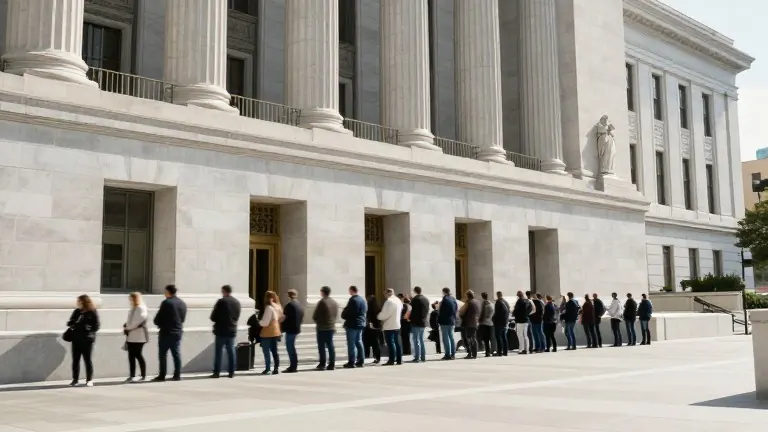
A new jury has begun its service in the federal courthouse downtown, marking the start of the second trial for the man accused of starting the fire that became the Palisades Fire. The defendant, Jonathan Rinderknecht, faces two federal arson counts after a previous panel failed to reach a unanimous decision. This retrial follows a June mistrial in which the initial jury voted 10 to 2 to acquit him on three charges.
The Palisades Fire stands as the most destructive blaze in Los Angeles history. The conflagration killed 12 people and consumed 23,448 acres of land. It destroyed approximately 6,500 structures across the Pacific Palisades and Malibu areas, resulting in billions of dollars in damage and insurance claims. Prosecutors argue the disaster began as a smaller incident known as the Lachman Fire on New Year's Day 2025.
Originally, Rinderknecht was charged with three counts: destruction of property by means of fire, arson affecting property used in interstate commerce, and timber set afire. Prosecutors have since filed a superseding indictment that drops the timber charge. The current case focuses solely on the alleged ignition of the Lachman Fire, rather than both the Lachman and Palisades fires. Rinderknecht has pleaded not guilty to the remaining charges.
U.S. District Judge Anne Hwang has ruled that the second jury should hear no references to the first trial. The defendant remains in federal custody pending the outcome of this proceeding. Three separate judges have previously determined that he poses a danger to the community. That determination relied on evidence that he concealed a firearm inside a child's teddy bear and threatened to burn down his sister's house in Florida.
First Assistant U.S. Attorney Bill Essayli stated that the government intends to secure guilty verdicts on all charged counts. In a post on the social platform X, Essayli wrote that the evidence strongly suggests Rinderknecht ignited the fire on January 1, 2025. He asserted that the team fully intends to retry the case before a new jury to obtain those convictions.
Defense attorney Steven Haney maintains that his client is innocent and that a retrial will not change the outcome. Haney criticized the prosecution's previous efforts, stating that they failed miserably to prove their case. He suggested that if the assistant U.S. Attorney wants to cheerlead from the sidelines, he should come in and try the case himself next time. Haney argued that the 10-2 vote in the first trial sent an overwhelming message that the government did not have enough evidence.
During the first ten-day trial, the jury heard that the Palisades Fire was a holdover from the Lachman Fire. Firefighters initially suppressed the Lachman Fire, which started near the Skull Rock Trailhead. However, the fire continued to smolder underground within the root structures of dense vegetation. On January 7, 2025, heavy winds caused the underground fire to resurface and spread above ground, leading to widespread damage in the Pacific Palisades and Malibu.
Prosecutors presented evidence from more than 30 witnesses, video surveillance, cell phone data, and fire dynamics analysis. They attempted to show that Rinderknecht intentionally set the Lachman Fire and then lied to investigators. The evidence was largely circumstantial. Haney argued that no hard evidence tied his client to arson and that the Lachman and Palisades fires were separate events. He told jurors that the first fire was likely caused by errant New Year's Eve fireworks.
According to Haney, Rinderknecht was on the trail near the Hidden Buddha clearing where the Lachman Fire began. The part-time Uber driver called 911 to report the blaze but did nothing else. Haney insisted that the fire could have started before Rinderknecht arrived on the scene. He noted that nobody knows for sure when the fire started, and everyone is guessing.
Prosecutors told the first jury that Rinderknecht, driven by anger and a desire for revenge against the wealthy, used a grill lighter to ignite hilltop vegetation around midnight on December 31, 2024. They claimed this occurred in a remote area adjacent to the Summit neighborhood. That initial ignition allegedly exploded into the deadly conflagration that wiped out much of the upscale community six days later.