Polls show Democrats leading in 218 House seats
Historical data suggests recent surveys have frequently underestimated Republican turnout, creating uncertainty for the November 3 election.
By Kaito Sokolov ·
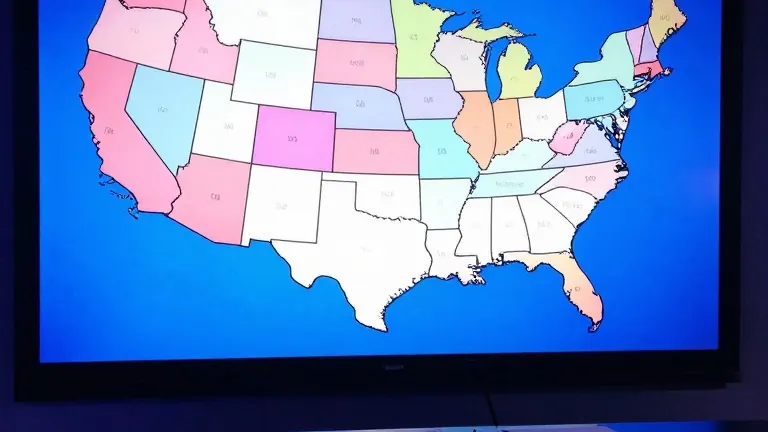
Democratic candidates currently hold leads in more than 218 House of Representatives seats, a threshold sufficient to seize control of the lower chamber from Republicans. Pollsters also place Democrats tied or narrowly ahead in critical Senate races, including South Carolina, which Donald Trump won by 18 percentage points in 2024. Recent surveys from CNN show Democratic advantages in Texas, Kansas, and Maine, while a New York Times poll indicates a tie in the South Carolina Senate contest.
These favorable numbers stand in contrast to the party’s performance in recent primaries. In Michigan, Democrat Abdul El-Sayed was predicted to win his Senate primary by double digits but secured victory by only 1%. In Wisconsin, a gubernatorial candidate who polled with a lead approaching 20 points lost by a fraction of a percent. Clifford Young, president of Ipsos Public Affairs, notes that reaching voters has become harder as Americans abandon landlines and screen calls.
Young argues that conservative voters, particularly those on the far right, are anti-establishment and less likely to participate in surveys. "Conservatives, especially those on the far right, are much more anti-establishment by nature," Young said. "And they don't participate in anything. They hate the system. That's the challenge." If Republican voters are systematically undercounted, voting models may skew toward Democrats.
Trump’s 2016 and 2024 presidential victories outperformed polling predictions, while his 2020 loss was narrower than surveys suggested for Joe Biden. In 2022, general election polls accurately predicted that Democrats would avoid a total wipeout despite President Biden’s low approval ratings. Democrats kept the Senate and lost the House by slim margins. Young attributes primary volatility to late-decision voters and distinguishes these contests from the general election cycle.
Several factors could limit Democratic gains in this midterms. Trump won much of the contested territory easily in 2024, giving Republicans a home-field advantage. Redistricting has reduced the number of seats that change hands between parties. The electorate has become more polarized, with fewer swing voters. Republicans also hold a cash advantage, with hundreds of millions of dollars spent on attack ads in the final weeks.
In 2010, Republicans flipped more than 60 House seats and gained in the Senate following economic struggles and healthcare reforms. This year, the roles are reversed with Democrats in opposition. Last year’s state and special elections saw Democrats outperform polls as their voters turned out in unexpectedly high numbers. The November 3 election will test whether current polling averages can overcome the historical difficulty of measuring undecided and disengaged voters.