Johnson's France Warning and GOP Record Face Democratic Wave
Speaker Mike Johnson's warnings of chaos and DSA control collide with sweeping Democratic victories in states he claimed were solidly red.
By Kaito Sokolov ·
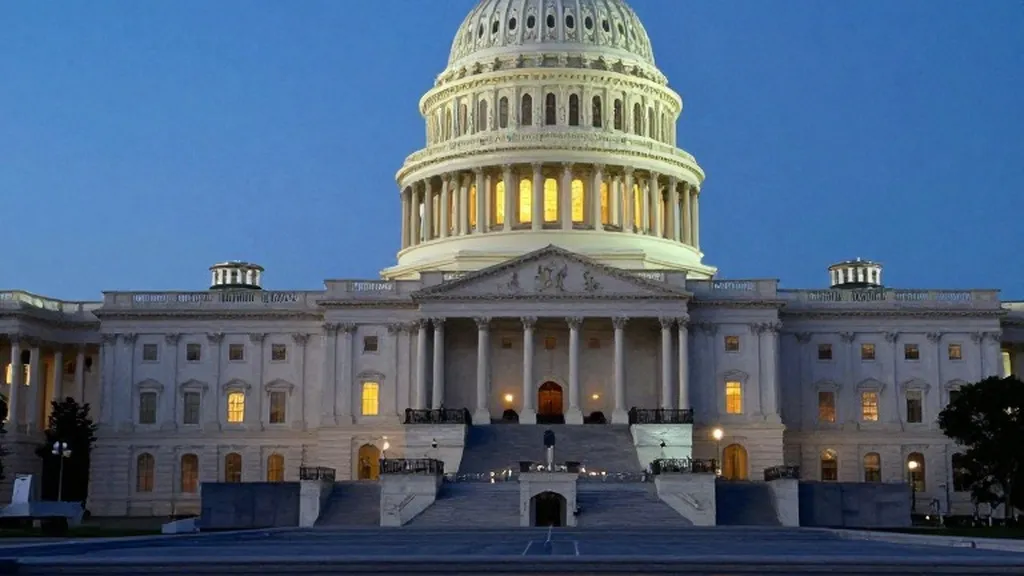
Speaker Mike Johnson spent the final days before the election warning that a Democratic House would be a disaster for the nation. In a USA Today op-ed published on October 30, he argued that even a narrow Democratic win would leave the chamber held hostage by the Democratic Socialists of America. He cited France as a dark harbinger of what could happen in the United States, pointing to violent riots and looting in cities like Limoges as evidence of the consequences of far-left policy.
Johnson described the French crisis as the result of decades of misguided choices, including lax immigration and border enforcement. He stated that the chaos unfolding in France serves as a preview of the path America could take if Democrats seize control. On Fox News, he reinforced this message, telling viewers that the Democrats have bent the knee to their far-left wing. He noted that old-school Democratic strategist James Carville admitted he would prefer Republicans keep the House because his party would be hostage to the DSA.
The Speaker emphasized that the coming two years would be defined by constant conflict. He told audiences that it would be chaos every day for two years in the next Congress. This rhetoric aimed to contrast the Republican record with what he described as the radical agenda of the insurgent far-left. He warned that Democrats would try to repeal the Working Families Tax Cut and open the borders wide, reversing the progress made during the Republican majority.
Despite these warnings, the results coming in on election night paint a very different picture. According to the Associated Press, Democrats have won control of the U.S. House in addition to the U.S. Senate. This decisive rebuke marks a shockingly strong performance for the opposition party. The AP reported that Democrats took a wrecking ball to the traditional map of political battlegrounds, electing candidates in states long considered reliably Republican.
In Kansas, voters backed a Democratic senator for the first time since 1932. Adam Hamilton defeated Republican Sen. Roger Marshall in a historic upset. South Carolina also rejected its Republican senator, Darline Graham, in favor of pediatrician Annie Andrews. These victories align with Johnson's warning about the shifting political landscape, but they contradict the GOP's prediction of a stable Republican hold on key states.
Texas, a state President Trump easily won in the 2024 presidential election, saw even deeper Democratic gains. Gina Hinojosa ousted Gov. Greg Abbott, ending a three-decade hold on the governor's office. James Talarico beat Ken Paxton for the Senate seat. The AP noted that until Tuesday, no Democrat had won a statewide race in Texas since 1994. This wave of victories challenges the narrative that the state was impervious to change.
The Republican majority, however, points to a robust record of delivery during the 119th Congress. Speaker Johnson highlighted the passage of the One Big Beautiful Bill, which included the largest middle- and working-class tax cut in history. He noted that Republicans delivered $4.6 trillion in lower taxes and a $1.6 trillion reduction in wasteful government spending. He also cited the lowest violent crime rate in 126 years and the largest decline in prescription drug costs in 60 years.
In his op-ed, Johnson claimed that Republicans delivered these historic results despite Democrats forcing three government shutdowns. He described the Republican majority as the slimmest since the Great Depression, emphasizing the difficulty of governing under those conditions. He argued that the party added more than one million private sector jobs to the economy and reshored American manufacturing. These achievements form the core of the GOP's argument that they have delivered on their promises.
The AP Voter Poll indicated that the electorate was deeply unhappy with the country's direction. About three-quarters of voters said they feel angry or dissatisfied with the current trajectory. The economy was a central concern, with three-quarters of voters rating it as not so good or poor. Johnson's warnings about the DSA and the chaos of a Democratic Congress were designed to tap into this dissatisfaction, framing the election as a choice between common sense and radical change.
Democrats have now secured a majority of governorships for the first time in two decades. This shift allows them to put up a stronger defense against President Trump's second-term agenda. The AP reported that this majority will be in place by 2027, with Democrats holding at least 27 governorships. This change in state-level control adds another layer of complexity to the national political landscape, potentially limiting the president's ability to push through federal initiatives.
As the results continue to come in, the contrast between Johnson's warnings and the actual outcomes is stark. He predicted a Democratic House would be held hostage by the DSA, yet the party has moved decisively to take control of both chambers of Congress. The AP noted that this sweep sets the stage for political gridlock for the remainder of Trump's term. The Speaker's emphasis on the slimmest majority in history now faces a new reality: a Democratic majority that has proven capable of winning in deep red states.