Google TPUs Enter Meta Data Centers via New PyTorch Integration
A new software bridge allows Meta to run its AI workloads on Google's custom chips, marking the first time these processors are sold to an external customer.
By Jonathan Ramirez ·
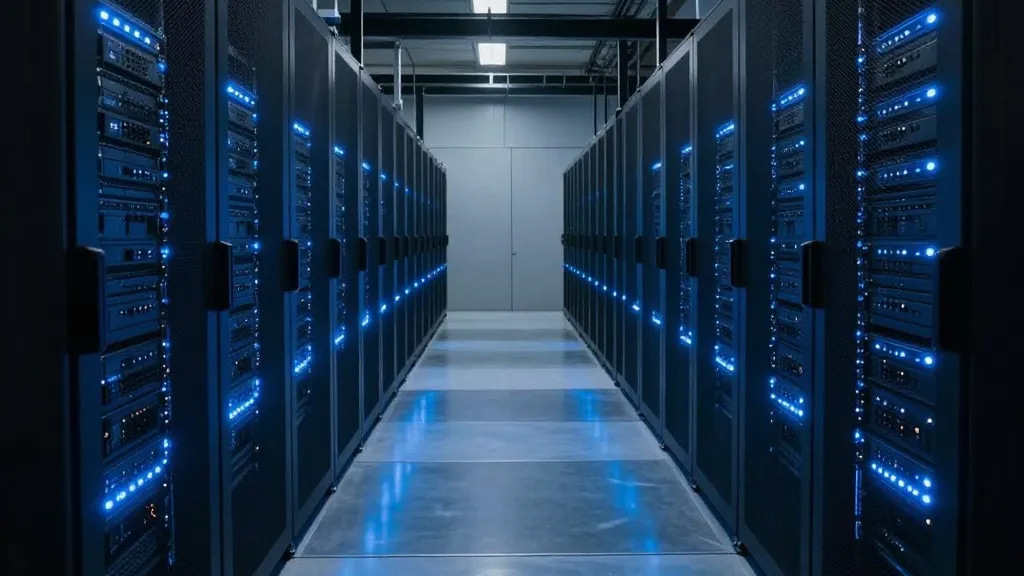
Google’s custom silicon has officially crossed a major industry boundary, as its tensor processing units (TPUs) now operate in production at Meta. This development marks the first instance of Google selling its proprietary AI hardware to an external customer, a move that directly challenges the entrenched market position of Nvidia. The shift is enabled by a new software layer that allows Meta’s existing AI models to run on Google’s chips without requiring a complete rewrite of their code.
The technical breakthrough centers on two popular inference engines, SGLang and vLLM, which have been updated to support PyTorch natively. Previously, running these engines on TPUs required using Google’s JAX framework, a different programming environment that many developers preferred to avoid. By creating a PyTorch-native version, the new setup allows Meta to deploy its workloads on Google hardware seamlessly. Zongwei Zhou, the PyTorch-TPU lead at Meta, confirmed that the SGLang system is already live in production, describing it as a "remarkably mature, PyTorch-native serving stack" resulting from a three-way collaboration between Meta, Google, and the SGLang team.
Meta has long sought to avoid being tied to a single hardware vendor. Jana van Greunen, Meta’s director of PyTorch engineering, noted that the company "cannot be constrained by a single hardware architecture." This new integration, known as TorchTPU, was co-developed by Google and Meta’s engineering teams. It serves as a successor to the older PyTorch/XLA bridge, which Meta used from 2020 to 2023 before canceling those contracts. The current push appears specifically designed to accommodate Meta’s preference for staying within the PyTorch ecosystem rather than migrating to JAX.
While the exact location of these production TPUs is not public, industry reports suggest that Meta and Google engaged in talks last year regarding rentals in 2026 and potential purchases in 2027. Meta is believed to have since signed a multi-year rental agreement, solidifying its reliance on Google’s infrastructure for parts of its AI operations. This strategic pivot comes just one day after Amazon announced it would open-source its own PyTorch backend for its Trainium chips, suggesting a broader industry effort to reduce dependency on Nvidia’s software ecosystem.
Performance benchmarks indicate the new setup is highly competitive. A tuned version of the vLLM engine, when serving a massive 2.8-trillion-parameter model, reportedly exceeded 700 tokens per second on Google’s seventh-generation Ironwood TPU. This outperformed the 452 tokens per second achieved by Nvidia’s GB200 chips in similar tests. Additionally, the new kernels for other large language models delivered between 1.4 and 2 times the throughput of the Nvidia baseline at small batch sizes.
The ecosystem is expected to expand quickly, with plans to add support for new models like DeepSeek V4.1 Flash by the first quarter of 2027. The goal is to provide day-zero support for new open-source models. Google, Meta, and RadixArk, the startup behind the SGLang engine, plan to share further details at the SGLang Summit in San Francisco in November 2026, potentially signaling a new era of competition in the AI hardware market.
This transition highlights a growing trend among major tech firms to diversify their hardware supply chains. By leveraging Google’s TPUs through familiar software interfaces, Meta gains flexibility in where it runs its AI workloads. As these integrations mature, they could force other cloud providers to rethink their own hardware and software strategies to remain competitive in the rapidly evolving AI landscape.