Alexandria City Hall Study Examines Slavery History
A new documentary project funded by a state grant will map the evolution of the Market Square block, focusing on its role in the enslaved labor market from the 18th century through the Jim Crow era.
By Jonathan Ramirez ·
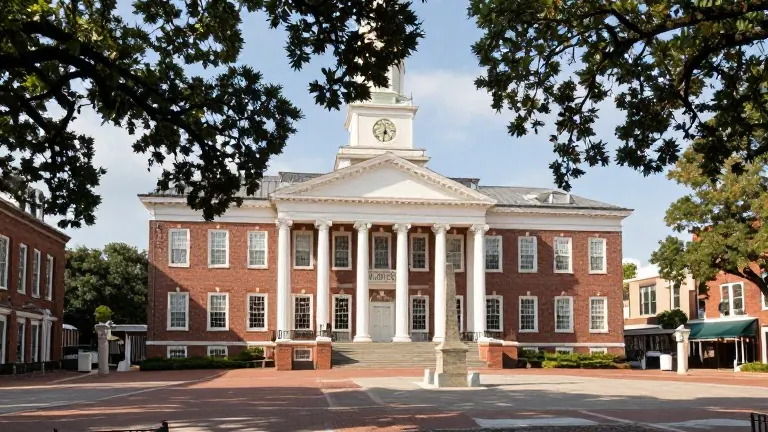
The Office of Historic Alexandria is leading a documentary study of the City Hall and Market Square block that seeks to document the site's history as a center for the buying and selling of enslaved people. The project, titled Alexandria City Hall, Market Square, and Slavery: A Documentary Study, was published by Greg Beaman in 2026 as part of the Alexandria Archaeology Publications series. The work is funded by a grant from The Commonwealth History Fund and aims to provide a historical context for the one-block area that has served as the civic center since the city's founding in 1749.
The current City Hall building, constructed in 1871, is home to more than 300 city employees and was added to the National Register of Historic Places in 1984. It was previously documented by the Historic American Building Survey for its contributions to architecture, commerce, and government. City officials initiated a major renovation project to repair aging components, improve security, and update operating systems for the structure. The City of Alexandria states that maintaining the building as the seat of government for years to come requires a deeper understanding of the block's development and changes over time.
Research for the study began in June 2025. The first phase of the project focuses on identifying the precise owners, occupants, and built elements within the block. These elements include the Market House, the Fairfax County Court House, the Jail and Prison, the Town Hall, the School House, and various commercial structures such as the Scale House, Watch House, Market Sheds, Fish House, and taverns. The study also examines horse markets and alleys that once ran through the area.
Researchers are using chains of title to track how the block was divided into smaller lots over the centuries. These changes in property lines are being recorded in Geographic Information System data to visually depict the shifts in land ownership. The team is also developing brief historical sketches of the people who lived and worked on the block, including white tenants, free blacks, and enslaved individuals.
The second goal of the study is to create a narrative detailing the block's function as an urban landscape of slavery, Emancipation, Reconstruction, and the Jim Crow era. While the site's role as a municipal government center is well documented, less is known about its use as a commercial hub for enslaved labor. The study aims to clarify how the block functioned as a space of enslavement and racial oppression alongside its civic duties.
The final publication, Alexandria City Hall, Market Square, and Slavery: A Documentary Study, is designated as publication number 149 in the Alexandria Archaeology Publications series. It serves as the academic foundation for the upcoming renovations and interpretation of the historic district.