Yemen government offensive shifts to grinding war of attrition after one month
Government forces report 16,100 Houthi casualties while Houthi missiles continue to strike Saudi airports and Yemeni towns.
By Rafael Collins ·
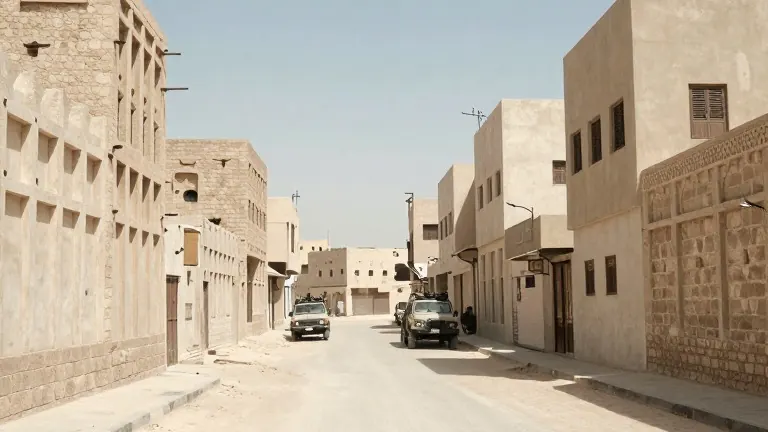
Residents of Sanaa, the Yemeni capital under Houthi control since 2014, have adjusted to a new rhythm of conflict. Mohammed Ahmed, a 40-year-old local man, described a sense of eased anxiety compared to the launch of the government offensive on October 5. The city remains largely calm, with the primary disruption coming from recurring air strikes rather than constant ground combat.
The Saudi-led coalition continues to back the internationally recognized government in what is known as Operation Dawn of Yemen. The initial push to seize territory has slowed in the capital, but the conflict has intensified in other regions. Houthi forces, also known as Ansar Allah, have expanded their territorial control in the southern provinces of Taiz and Lahij.
Experts characterize the current phase as a war of attrition that shows no immediate signs of ending. Turki al-Goblan, head of the Saudi Daimumah Center for Studies, stated that the offensive has struck three key pillars of the Houthi survival strategy. These include the fuel and supply chain for combat vehicles, the maritime routes near the Bab al-Mandeb strait, and the tribal support networks around Sanaa.
Al-Goblan argued that targeting these areas simultaneously changes the dynamic of the war. He noted that the focus shifts from the scale of initial losses to the ability to replenish them. According to him, repeated losses create an accumulating inability to sustain the fight, making attrition a tool for achieving a decisive outcome.
The government released casualty figures late last week, stating that 16,100 Houthi operatives and commanders have been killed or wounded since October 5. In contrast, Houthi spokesperson Yahya Saree said coalition attacks have reached 3,939. The Houthis have not confirmed their own death tolls and continue to launch missiles and drones daily into Saudi Arabia, disrupting air traffic over the kingdom.
Yazeed al-Jeddawy, a research manager at the Sana'a Center for Strategic Studies, said the balance of power has not shifted in the past 30 days. He described the conflict as intertwined with wider regional confrontations involving Iran. He noted that Tehran views the Houthis as strategic leverage, while Riyadh seeks to curb the group's military capabilities to protect vital maritime routes.
Government forces announced they reclaimed control of the Dhubab district in Taiz and key positions near Bab al-Mandeb. They also recaptured strategic heights east of al-Hazm in the northern governorate of al-Jawf. Colonel Wadah al-Dubaish, spokesperson for the government-aligned Joint Forces, acknowledged Houthi expansion in Taiz but argued the cost to the group is extremely high.
Al-Dubaish stated that the Houthis have lost more in the past month than in previous years combined. He suggested the group used past ceasefires to prepare and mobilize. One recent Houthi missile attack killed at least 70 government security recruits in Shabwah, demonstrating the group's continued ability to strike both government-held territory and Saudi Arabia.