Subway Death Led to Venture Capital Partnership for Man Who Choked Passenger
A new book argues that systemic abandonment drove both the victim and the man who killed him to rely on each other rather than institutions.
By Jonathan Ramirez ·
Daniel Penny now holds a partnership title at a Silicon Valley venture capital firm, a position secured shortly after his acquittal in the death of a New York City subway passenger.
The job offer came from Andreessen Horowitz, where Penny was named to a team focused on American dynamism. That team invests in startups developing weapons systems and drones. He had not completed a college degree at the time.
Penny received the offer within days of Vice President-elect JD Vance inviting him to the Army-Navy game alongside President-elect Trump. The invitations and career move followed a December 2024 verdict in which a jury acquitted Penny of criminally negligent homicide. A hung jury on a second degree manslaughter charge led the prosecution to dismiss that count.
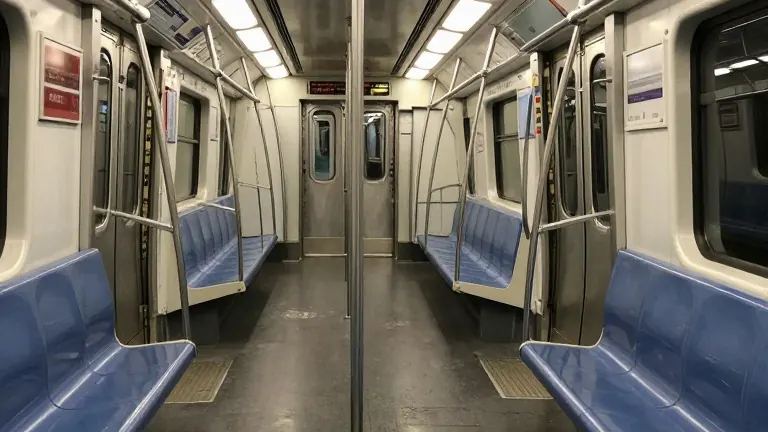
The incident occurred on May 1, 2023, when Jordan Neely boarded a subway train in a state of crisis. Neely, an unhoused Black man, had spent years performing as a Michael Jackson impersonator. On that day, he shouted threats and frightened other riders. Penny, a white former Marine, stepped in and placed Neely in a chokehold for six minutes until Neely stopped breathing.
Journalist Anand Giridharadas spent more than two years investigating the events behind the viral video. His book, Man in the Mirror: Hope, Struggle, and Belonging in an American City, examines the institutional failures surrounding both men. Giridharadas argues that both Neely and Penny felt abandoned by systems meant to protect them.
Giridharadas notes that Neely felt abandoned for a long time, while Penny claimed law enforcement and care systems failed to act. Neely had a police record spanning more than a decade, initially involving minor offenses like jumping turnstiles. Later records included violent crimes, such as assaulting a woman. Prosecutors and defense attorneys agreed to send Neely to a rehab facility in the Bronx instead of prison as part of an alternative to incarceration program.
Neely walked out of that facility. In April 2023, weeks before his death, outreach workers and police encountered him on a Coney Island platform. He acted erratically and ran into the night. Police did not realize a warrant for his arrest was outstanding, and outreach workers did not immediately recognize him as a known case. He died on the floor of a subway car a few weeks later.
Giridharadas describes Penny's hometown of West Islip, Long Island, as a community shaped by white flight from New York City. He compares these suburbs to middle-class refugee camps. Giridharadas suggests that a framework of immigrant relationships helps explain the complex feelings these towns hold toward the metropolitan area they left behind.
During interviews, Giridharadas stated he did not sense sadness or remorse in Penny. He noted that Penny appeared ideologically blank before becoming a symbol for various political groups. Giridharadas observed that Penny willingly embraced the money and attention that followed the case, including his appearance with national leaders.
The case coincided with the assassination of Brian Thompson, UnitedHealth Group's CEO, by Luigi Mangione. Giridharadas notes that arguments about stepping into a systemic void emerged on both sides of the political spectrum. He quotes Black Lives Matter activist Hawk Newsome, who said if people want vigilantes, they need Black vigilantes, but also need to build their own schools and media. Giridharadas identifies a common thread across political lines: the belief that decent people feel forced to take matters into their own hands because of pervasive abandonment.