Philadelphia's CLIP, Parks and Streets Meet 311 Targets for Rich and Poor Alike
An analysis of nearly 1.5 million Philly311 tickets shows three city departments hitting service goals at similar speeds across income levels.
By Kaito Sokolov ·
Three of Philadelphia's largest city departments are meeting their service targets for residents across income levels, according to an analysis of nearly 1.5 million Philly311 tickets from 2024 to early 2026. The review covered the Office of Homeless Services, Parks and Recreation, the Community Life Improvement Program, Streets, Fire, Police, and Licenses and Inspections.
The Office of Homeless Services ranked first, meeting its Service Level Agreement on 93.3 percent of its 3,973 tickets over the two-year period. CLIP, the Community Life Improvement Program, closed 91.3 percent of its 40,043 tickets within the target window. The city's 311 system publishes target dates for when an issue will be addressed, and the analysis measured how often departments met them.
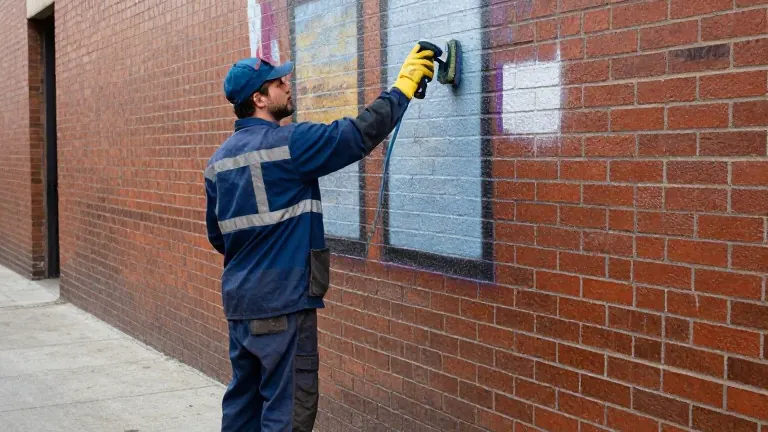
CLIP's largest service is graffiti removal, handled under ticket code SR-CL01. That category accounted for 21,533 tickets closed since the start of 2024, with a median close time of 4.9 days. The median was 4.84 days in lower-income zip codes and 4.70 days in higher-income zip codes, a gap of 3.4 hours. Other departments showed wider gaps: Licenses and Inspections recorded a 28.4 day difference and the Police Department 41.0 days between richer and poorer zip codes for comparable work.
Tom Conway, deputy managing director of CLIP, said the program assigns a target close date to every ticket it receives. "CLIP has always taken a proactive approach to tackling quality-of-life issues by inspecting entire blocks rather than simply reacting to isolated complaints," Conway said. The program began as a graffiti cleanup effort under Mayor Ed Rendell in the late 1990s and handles roughly 20,000 complaints a year. Conway has worked for CLIP and its predecessor agencies for about 30 years.
The analysis identified three practices among departments that met their targets: setting a realistic close date, using job-specific ticket types for each kind of work, and serving residents at the same speed regardless of zip code. For like-for-like work, the difference between richer and poorer zip codes was -0.13 days at Parks and Recreation, 0.8 days at Streets, and 0.15 days for CLIP graffiti work.
CLIP crews are dispatched to clean graffiti and litter, sometimes with the help of residents completing community service hours. Conway said employees treat the work as their own neighborhoods: "The cultural connection to communities throughout Philadelphia makes CLIP employees strive to be the most efficient and effective as it is their neighborhood they are cleaning." The analysis was written by Nick Jain, a Philadelphia resident who previously lived in Strawberry Mansion and now lives in Fairmount.