Hong Kong Judge Orders Joshua Wong to Serve 10 Years for Foreign Collusion
The 30-year-old activist will serve his new sentence alongside a remaining two-month term, extending his time behind bars well beyond his initial release date.
By Rafael Collins ·
Joshua Wong faces a decade of imprisonment after a Hong Kong judge imposed a 10-year sentence for his second conviction under the city's national security law. The ruling extends the 30-year-old activist's time behind bars, adding to a four-year, eight-month term he is already serving.
Judge William Tam sentenced Wong on Thursday following a guilty plea entered in September. The charge involves conspiracy to collude with foreign forces to endanger national security. Tam described the offense as grave and rejected arguments that Wong's role was limited. The judge stated he considered a 13-year sentence as a starting point but reduced the term due to the plea.
Wong had been scheduled for release in January 2027 based on his previous conviction. The judge allowed the two sentences to run concurrently. This decision means Wong has approximately two months left on his current term before the new 10-year sentence effectively begins its full course.
The prosecution argued that Wong and fellow activist Nathan Law agreed to lobby international bodies for democratic self-determination around 2016. Authorities claimed the pair sought sanctions and adverse measures against Hong Kong and China. The case cites meetings with U.S. politicians, including Nancy Pelosi and Marco Rubio, in 2016 and 2019. After the security law was enacted, the state said Wong supported foreign advocacy efforts from within Hong Kong via media and social channels.
Defense lawyer Derek Chan urged the court for a lenient sentence to give Wong hope. Chan noted that Wong wishes to care for his parents after release. Friends reported that the activist has continued to read, exercise, and learn guitar during his nearly six years of incarceration.
Eric Lai, a research fellow at the Georgetown Center for Asian Law, said the ruling demonstrates the authorities' intent to keep prominent figures in prison. He noted that national security charges can be used repeatedly to detain specific political prisoners if the government deems it necessary. This approach follows a pattern where Hong Kong authorities have reduced public choice in elections and arrested leading activists since the 2019 movement.
Beijing views Wong as an anti-China figure who supports Hong Kong independence. The territory's security bureau maintains that the law is essential for stability and that enforcement actions are evidence-based. The government's stance contrasts with the view of critics who see the crackdown as a way to chill civic activism and dissent.
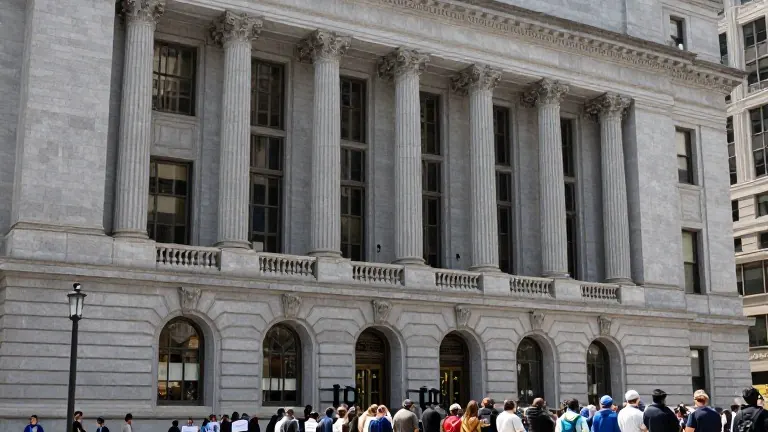
Supporters gathered outside the court early in the week to secure seats in the public gallery. Activist Lui Yuk-lin held a sign with Wong's name in the queue. Tiffany Chin, a former member of the disbanded group Scholarism, was in tears as Wong left the court. Wong appeared calm and thanked his supporters before exiting.
A pro-Beijing newspaper recently criticized a 2017 Netflix documentary about Wong for beautifying his crimes. The city's security bureau told local media that the government was taking follow-up action. The documentary subsequently rose to the top of Netflix's popular chart in Hong Kong. Wong remains a central figure in the pro-democracy movement, representing a generation born before the city's return to China in 1997.