CoreWeave's Slide Sparks Race to Trade Physical GPU Compute
Startups and exchanges are building new markets to sell hardware capacity, offering a hedge that cash-settled contracts may not provide.
By Kaito Sokolov ·
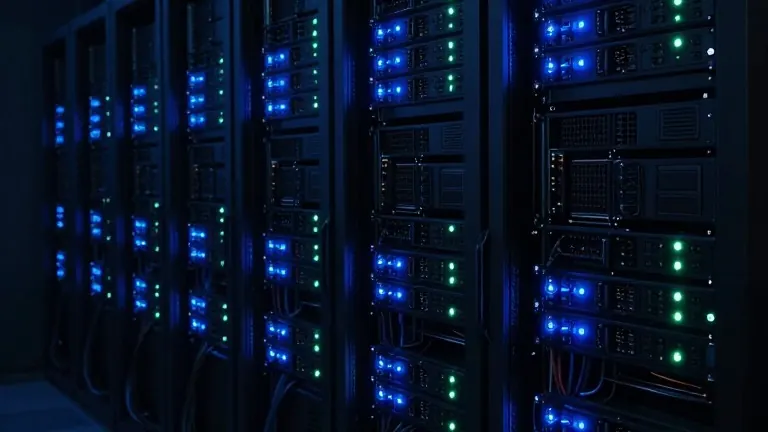
The sharp drop in CoreWeave shares has forced Wall Street to look for ways to protect against a collapse in AI demand.
Traders are turning to a new tool: a marketplace for buying and selling actual GPU computing power.
Jasper Zhang, a former quantitative researcher at Citadel Securities, leads Hyperbolic, a 50-person startup building this spot marketplace.
The company launched in 2022 and has raised $20 million so far.
Hyperbolic uses software called Forge to log into GPU clusters around the world and make technical adjustments.
This process allows mismatched hardware to function as a standardized unit, letting traders buy, sell, and control specific physical clusters.
Zhang argues this method is similar to being in the data center and serves as the foundation for physically settled GPU futures.
Such contracts would give owners full control over hardware with known characteristics, providing a direct hedge against falling AI demand.
Current GPU performance varies widely based on data center setup, networking, and memory configurations.
Financing agreements often prevent builders from sharing pricing data, which can skew survey-based indices.
This creates a basis risk that market makers must solve, a gap Zhang believes Hyperbolic can fill.
Zhang, who is 31, holds math medals from China and completed a doctorate at U.C. Berkeley in two years before joining Citadel Securities to build trading models. The company's head of finance, Hong Chan Kim, previously worked at Point72, Balyasny Asset Management, and Citadel LLC. Hyperbolic expects to reach a $150 million annualized run rate by the end of the year. It reports about 250,000 users and connects an estimated $200 million worth of annual GPU compute to its platform. The company is currently in the midst of another funding round. Other major players are also entering the AI hedging market. CME Group plans to offer a cash-settled futures product tied to GPU pricing maintained by Silicon Data. Silicon Data is backed by DRW, a major proprietary trading firm in Chicago. Don Wilson, founder and CEO of DRW, said on a call that there is a ton of demand and capital flowing into the ecosystem, creating substantial risk. He noted that cash futures are a good starting point, similar to cash-settled electricity and oil contracts. The CME product is under review by the CFTC, which extended the review period to November 9. This delay likely also affects another futures contract proposed by Intercontinental Exchange and data provider Ornn, which is backed by Andreessen Horowitz's a16z crypto fund. Kim, Hyperbolic's head of finance, believes cash-settled futures will not reflect reality accurately. He stated that physical usage will tether the connection between reality and derivatives. The main issue is that cash futures are an imperfect hedge for real-world risk. If AI demand stalls, companies like CoreWeave could be left with billions of dollars in hardware and few ways to cash out. Carmen Li, CEO of Silicon Data and DRW-backed Compute Exchange, explained that indices are normalized global numbers. She said this provides financial hedging but does not help with procurement. Zhang contends that the AI complex needs a virtual pipeline to physical hardware, especially smaller startups that lack the capital or credit to make large hardware purchases. He noted that CoreWeave's debt situation would be less concerning if providers had more ways to monetize available GPU capacity during a slowdown, particularly when long-term contracts have thin margins. He added that cash-settled futures can help with falling prices but do not put idle GPUs to work by themselves.
More Business · Bad Business · Report a business · Got a Story?