38 Bronze Coins Found in Sealed Pompeii Wardrobe
Archaeologists recovered trade goods and a child's rattle necklace from a residence on Via dell’Abbondanza, offering a financial snapshot of Roman daily life.
By Rafael Collins ·
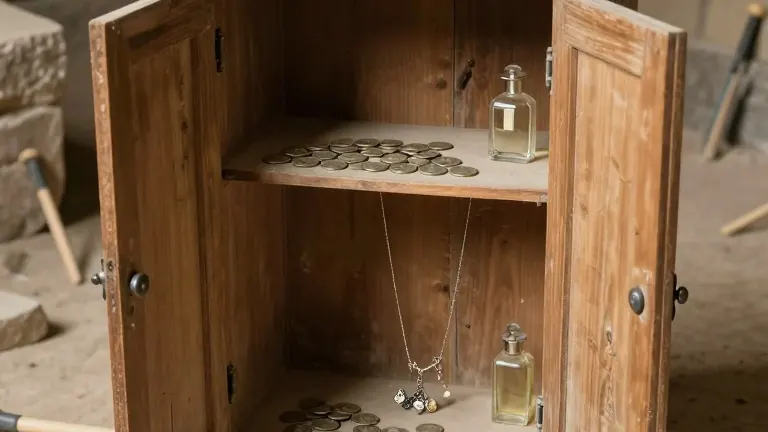
A wooden wardrobe in Pompeii held 38 bronze coins, cooking pots, and a lead-weighted box that indicate the owner was a tradesperson. The sealed storage unit sat in a home on Via dell’Abbondanza, a primary commercial corridor in the ancient city. The collection was unearthed during a restoration project that began examining the interior rooms of the property in 2026.
Gabriel Zuchtriegel, director of the Pompeii archaeological park, noted that the presence of cash and personal effects suggests the residents fled the eruption of Mount Vesuvius in AD 79 with little time to pack. The site had been known since 1912 when the facade was first dug, but interior spaces remained closed off until now. The new finds add to the record of the household previously linked to a man named Cornelius Maximus.
The wardrobe also contained a small glass perfume bottle, tweezers, an incense burner, and a bronze lantern. These items point to a specific consumer lifestyle. Zuchtriegel emphasized that the objects reveal the economic habits of people who moved frequently across the Mediterranean. He described the society as one where displaced individuals carried personal assets with them.
The most detailed artifact was a necklace known as crepundia. It held more than 20 small charms made of various materials. The pieces depicted the deities Bes and Mercury. Zuchtriegel explained that this type of jewelry served a practical purpose for children. The charms rattled to help parents locate their children and acted as identifiers if a child was separated from family members.
Archaeologists also uncovered the fragmented skeletons of two mice inside an amphora in a storage area. The amphora had been used to hold goods in the home. The discovery of small fauna in the vessel provides a biological marker for the storage conditions of the residence. The team is currently focused on the servants' quarters of the property.
Work is also continuing at the Villa of the Mysteries, a structure first exposed in the early 20th century. Zuchtriegel stated that the team aims to complete the excavation of the lower-status areas. He said the goal is to find more data on the daily life and economy of servants who lived in the shadow of the wealthy owners. The previous focus on frescoes had left the living quarters of the staff underexamined.
The current findings follow a 2025 discovery of a thermal bath complex on Via di Nola. That structure was located in Regio IX, a wealthy district. In 2023, a bakery with cramped conditions was found in the same area, where enslaved people were believed to work. The new wardrobe contents align with a pattern of recent finds that document the commercial and domestic infrastructure of the city.
More Business · Bad Business · Report a business · Got a Story?